
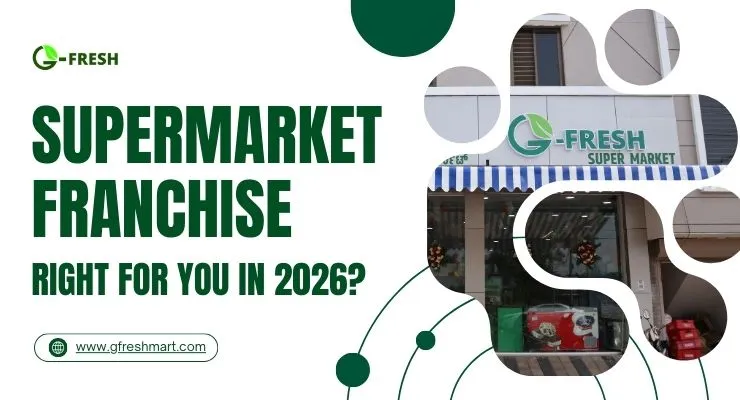
The Indian retail scene is exploding in 2026, projected to be worth a staggering $2.1 trillion. People in Tier-2 and Tier-3 towns aren’t just sticking to the old ways of doing things, they’re jumping into modern retail with both feet and expecting a whole lot more from their shopping experience than just rows of stuff on shelves. They want quality, and they want choices.
As people’s habits shift, it all comes down to one thing: being able to spot where the next big thing in supermarket franchise is going to be. That’s how you catch the wave, rather than just watching it ride on by.
Built-in Stability and a Solid Reputation
New business owners gain substantial head starts through franchise models in 2026, securing instant stability and recognised brand reputation.
Tried-and-tested operational systems accompany the immediate recognition that franchises provide naturally.
As it happens, consumer trust is the real currency that gets traded in the market, and businesses that are starting from scratch often struggle because of supply chain problems and the fact that they just aren’t well-known yet.
Against that backdrop, G-Fresh Mart stands out as a major player, people widely regard it as India’s ‘go-to’supermarket franchise business, one that’s both profitable and supportive with a proven system in place.
And for good reason: it’s one of India’s fastest-growing supermarket franchises, with a catalogue of over 20,000 products picked up from a whopping 1,500 national and international brands.
Store owners can draw on that variety to meet the community’s needs right off the bat, because by pooling their buying power they can keep margins healthy even when commodity prices are all over the place and the global trade is in turmoil.
Meanwhile, shared advertising and bulk discounts give them unbeatable prices that stifle the local competition and bring in a steady stream of customers from day one.
Read More: Retail vs Wholesale: Which Model Works Best for a Supermarket Business?
Capital Intensity and Standardised Constraints – The Harsh Reality of Supermarket Franchises
Running a supermarket franchise in India these days requires a serious chunk of cash. You’re looking at a minimum of ₹20-25 lakhs supermarket franchise investment just to get one up and running, and that’s with the right franchise model in hand.
Franchise fees alone can cost you anything between ₹10-14 lakhs, leaving you with a paltry ₹8 lakhs to put towards stock, and of course that’s not even counting the costs of setting up the tech and interior.
And let’s not even get started on the extra expenses that just keep piling up, you’ll be shelling out royalties & marketing fees on top of all that, plus you’ve got to stick to the parent company’s branding and rules.
It can get pretty soul-crushing if you’re the type who likes to try new things & experiment, you’re basically stuck to the company’s way of doing things & your results are in the hands of the head office. Which, to be honest, can be pretty demotivating.
Aspiring franchisees discover that G-Fresh Mini Mart provides India’s most economical supermarket franchise entry point currently available.
- Opening a 500 square foot outlet demands just ₹12,97,800 in total startup investment from entrepreneurs. This amount represents significant savings compared to typical franchise entry costs across the supermarket industry.
- Franchise fees total ₹2,47,800, with additional charges of ₹50k for software and ₹500k for initial purchasing.
- Interior development requires another ₹5,00,000 investment, finalising the complete setup package for new operators.
They’ve stripped out all the usual extra costs, so you don’t have to jump through hoops just to get started. You still get solid brand support, but without the steep entry price that usually keeps people out. For entrepreneurs who want in, it’s the lowest-cost supermarket franchise you’ll find in the country and G-Fresh makes sure you actually have a shot.
Read More: Mini Supermarket Investment: Key Points to Know
Tier-2 Expansion and Digital Integration
The 2026 Indian market presents massive opportunities through the emerging “Bharat” narrative. Smaller towns witness growing disposable incomes that create demand for organised retail experiences.
Private label products now fill over half of shopping baskets while generating better margins than traditional branded items.
The revolutionary phygital model repositions franchise stores as comprehensive neighbourhood fulfilment centres handling physical and digital transactions seamlessly.
Wellness items and organic products attract growing consumer interest as health awareness penetrates urban and rural markets uniformly.
Franchisors also deploy AI inventory tools that forecast festive demand with 95 per cent accuracy, preventing stock-outs and lowering capital locked in slow-moving inventory.
These advantages form the key benefits of supermarket franchise models because technology and centralised systems give individual owners a strong competitive position.
Another opportunity appears through the “Loyalty Ecosystem,” where data analytics support personalised discounts that raise the lifetime value of repeat customers.
Since discount seeking remains common nationwide, targeted data-supported promotions provide strong potential to increase basket size and ensure the store becomes the main monthly grocery destination.
Read More: How to Launch a Successful Supermarket Franchise Easily
Competitive Density and The Quick-Commerce Surge
Right now, quick commerce platforms are growing fast, and commercial real estate just keeps getting more expensive. Supermarkets in big cities feel the squeeze.
Everyone wants groceries delivered in 10 to 15 minutes, so stores have to ask themselves, what makes us different? To keep up, a lot of them lean into experience-driven shopping and offer bulk discounts.
It’s about keeping their franchise business profitability high, even when the rules keep piling up. The rollout of advanced digital tax systems is really piling on the compliance headaches for retailers across the country.
Food safety laws have gotten a lot tougher, and that means retailers need to keep super-tight records and have some seriously robust processes in place right across their stores.
And for solo operators, that can be just about impossible to manage on their own without some serious outside help on the legal side.
Retail businesses today sometimes weaken their own foundations when they concentrate too heavily on launching multiple stores within the same surrounding market space.
The reality becomes visible when you encounter three outlets tightly packed into a small neighbourhood, which clearly represents what economists identify as market saturation.
The resulting customer shortage forces aggressive pricing strategies that benefit nobody involved.
Profits vanish whilst businesses struggle against each other in futile competition. Creating a brand that resonates emotionally with customers, combined with exclusive product offerings, provides the only reliable protection.
When choosing a franchise business profitability model you’re looking for one that’s going to give you a real edge in the market through that all important branding.
Being part of an efficient supply chain and having the trust of your customers, that’s what sets the successful franchisees apart from the one-man bands.
And then there’s the problem of prices, fuel cost shocks and logistics price increases really squeeze the margins.
Retailers are constantly torn between keeping costs down or keeping the customers happy. It all comes down to being on top of the market and being ready to make some quick decisions when things heat up.
Costs, Margins, and ROI
Taking a realistic view of supermarket operations means analysing the financial metrics of margins and investment yields.
- Within the 2026 economic landscape, regular fast-moving consumer products deliver profit margins sitting between 10% and 12%.
- Speciality departments such as artisan foods, necessities, and home plastic goods can elevate these figures towards 18% or 20%.
Top franchises move their merchandise fast, they aim to swap out their entire inventory every month, maybe every six weeks at most.
The big costs – staff paychecks, power bills (especially for refrigeration), and rent. If you don’t keep a tight grip on these, profits slip away. Run things right, and most franchises in India start turning a profit in about 18 to 24 months.
Retail excellence isn’t just about making sales, it’s about staying sharp with loss prevention too. If you don’t keep an eye on theft or spoiled goods, you can watch 3% of your income disappear, especially if your till system isn’t up to date.
Comprehending the supermarket franchise cost in India becomes essential for establishing and preserving strong profit percentages from inception.
The distinction between failing enterprises and lucrative investments lies in skilful expense management that ensures steady cash generation for business proprietors.
The G-Fresh Mart Edge: A Case for Long-Term Success
During assessments of success probability in the 2026 retail market, observers identify G-Fresh Mart as India’s most trusted and profitable supermarket franchise, supported by a proven retail franchise business model aimed at delivering returns and maintaining long-term stability.
Because this model enables rapid growth, the brand now operates in over 250 fast-developing cities across 22 states, while recording a success rate of 92%.
- G-Fresh Mart operates a total of 400 locations, ranging from small 3,000 square foot shops in Chittaurgarh to larger 6,000 square foot supermarkets in Bihar.
- They’ve managed to attract a pretty impressive half a million customers by stocking an incredibly diverse range of over 20,000 products, everything from everyday groceries to home appliances and office supplies.
- You’ll see both local and international brands on their shelves, the likes of Hindustan Unilever, ITC, Procter & Gamble, Nestle, Dabur, and loads more.
- For anyone looking to open their own business, the setup process is remarkably efficient from the initial meeting and site visit all the way through to getting the area code activated and the store up and running. They claim to be able to have any new store up and running in just 45 days.
Within this process, potential owners will have the opportunity to choose from flexible startup options such as a Mini Mart, a Super Mart or even a Hyper Mart, all of which are backed by Basic, Optimised and Premium tiers.
This makes it easy for investors to carve out a piece of the best grocery franchise 2026 by choosing a scalable format and getting some clear direction on how to get started.
After all’s said and done and you’ve got your business up and running, the franchise will still be right there to support you with all the bits and bobs you need through software integration, workforce training, and marketing services plus, you’ll get to tap into the expertise of experienced folk who will guide you every step of the way to retail success.
Check out this: Complete Guide to Launch Grocery Franchise in India
Conclusion: Taking a Leap into Your Retail Dream
By the time 2026 rolls around, diving into a supermarket franchise is going to be an attractive way for entrepreneurs to get a foot into one of India’s most dynamic and in-demand sectors.
Sure, it’s not going to be easy and you’ll need some serious cash to get things off the ground, but using a tried and tested model makes all the difference.
Working with an established brand means that investors can start a supermarket franchise that delivers steady commercial success and personal financial stability.
Over time, those efforts will pay off in a big way, turning an ordinary retail shop into a local favourite that serves the community.